Articles
500 Connectors for Easy Data Ingestion and Mapping: Transform Your Data Integration Now
mmichi.huizinga6 min read
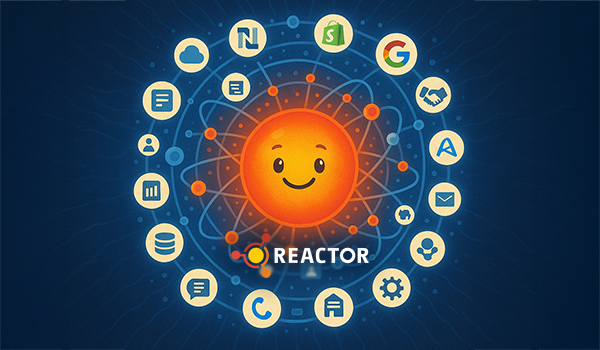
Are you tired of data integration headaches? Let’s walk through how Reactor’s ecosystem of 500+ connectors and our NEW Electron AI-assisted intelligent mapping feature. It can help you break free from mapping, integration, and maintenance nightmares and turn your data into real business value.
What could you build with those extra months back?
Introduction: The Hidden Cost of Data Integration
Data integration is changing fast, and AI is at the center of the transformation. The jobs of data engineers and analysts are about to shift dramatically. Here’s a staggering fact: 73% of data professionals spend their time on tedious integration and transformation tasks (AKA Data wrangling) rather than surfacing insights. According to McKinsey, this inefficiency drains over $5 billion in productivity from U.S. businesses annually. Most companies patch together a mix of tools, custom scripts, legacy ETL platforms, and manual workarounds. It creates fragile, expensive systems that constantly need fixing. Some call this the "Modern Data Platform". Is it the right approach? Maybe. But more often, it’s duct tape holding together, which should be seamless. Many SaaS-oriented companies are trying to extract as much fee revenue from you as possible. The SaaS industry calls this share of wallet. According to Satya Nadella, AI assistants and agents will disrupt the SaaS industry if they do not adapt. I am paraphrasing this statement, but you can look up all the times he has mentioned this over the last year. This might not differ from Marc Andreessen's statement that "software is eating the world." The new wave of data movement and integration is like building a freeway one brick at a time when pre-paved sections already exist. AI has now created a pre-paved highway for us, and it will continue to build on this infrastructure. So let’s ask the obvious question: Are your teams doing work they want to do, or are they just keeping things from falling apart?Why Traditional Integration Keeps Letting Us Down
Traditional and even "modern" data integration is struggling to keep up. Data teams are buried in complexity, hand-prepping data while leadership waits for insight. Silos naturally emerge as companies grow. Marketing is in HubSpot. Sales lives in Salesforce. Ops runs on SAP, Oracle, or Manhattan Associates. The result? A fractured mess of tools, all speaking different languages and needing their fragile custom connectors.The Real Cost of Custom Connectors
Let’s talk dollars and time. Building a custom connector takes 3–6 weeks or more. Even if you start with open-source, you still have to host, test, document, and maintain. With U.S.-based engineers charging $10,000–$15,000 per month (source), a single connector could cost you $10K–$25K upfront. Multiply that by 20 data sources for a mid-size retailer:- 6 months of dev time
- $200K–$500K upfront costs
- $50K–$100K/year in maintenance
The Bottlenecks Slowing Everyone Down
It’s not just the money. These broken approaches are creating pain everywhere:- Bottlenecks: Teams wait weeks for IT to connect a single platform
- Delays: Critical business decisions stall out while teams wait on data
- Scaling woes: Each new tool multiplies the complexity
- Inconsistent data: Different teams define the same metrics differently
Enter Reactor: The 500+ Connector Revolution
Reactor’s connector library flips the model entirely. Instead of custom-building connections one painful link at a time, you get access to hundreds of pre-built connectors—ready to plug into your data ecosystem. These connectors are built to work with what you already use:- e-Commerce: Shopify, Magento, WooCommerce
- Sales/CRM: Salesforce, HubSpot
- ERP: SAP, Oracle, Manhattan
- Marketing: Iterable, Braze, Klaviyo, Marketo, and more
Plug-and-Play Architecture That Just Works
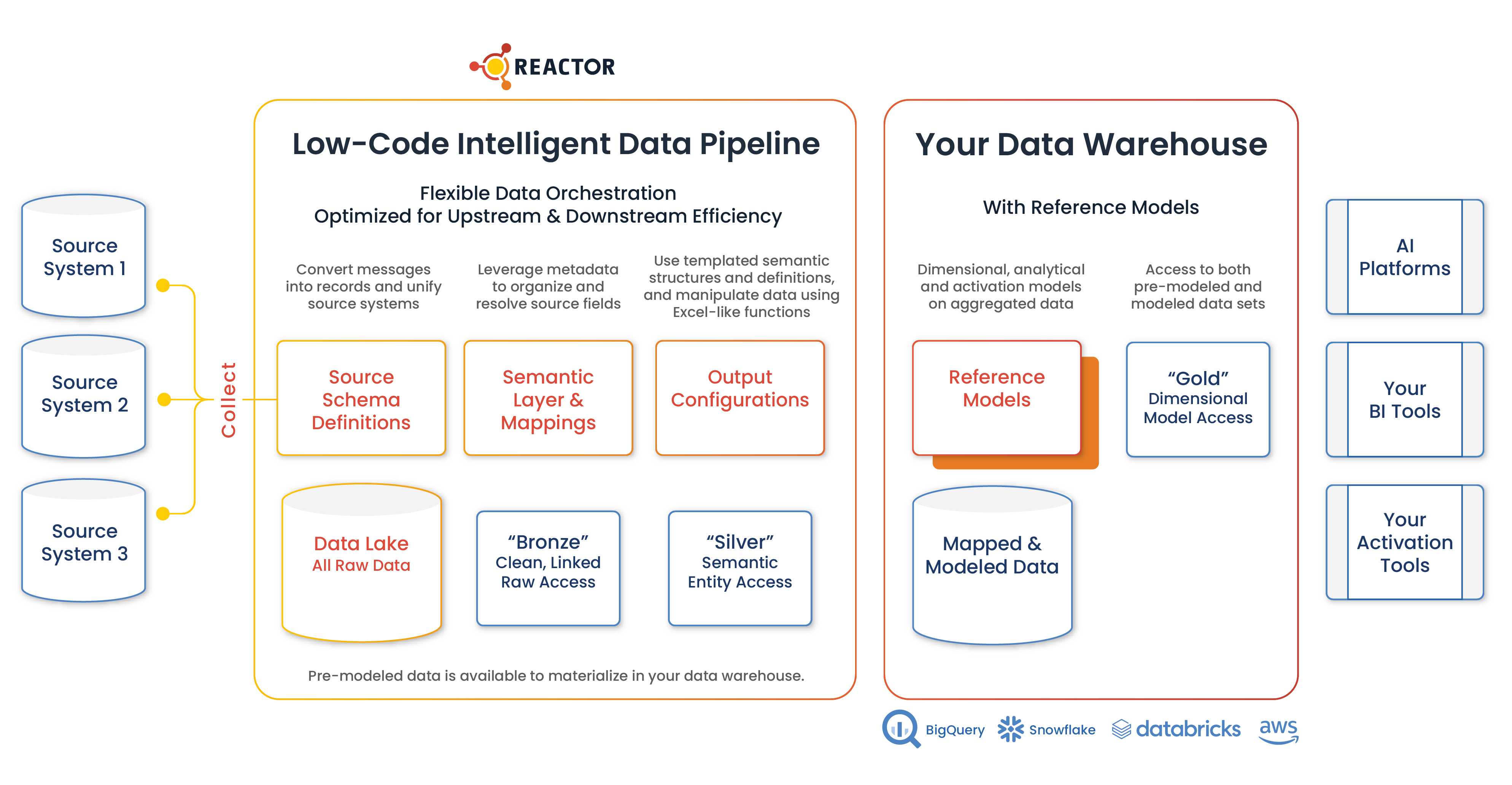
Traditional integration = writing weeks of custom code. Reactor connectors = plug it in, and it works. Powered by Airbyte’s open-source specification framework and enhanced by Reactor, our connectors are:- Pre-configured: They recognize source systems right out of the box
- Standards-driven: They speak a consistent language across tools to more easily map data
- Self-describing: They explain where the data comes from and what it means
Unifying Your Data Language
With Reactor, data across your organization finally speaks the same language:- A customer is a customer and an order is an order—no matter where they came from
- Orders follow a single structure, whether from app, site, or store
- Products look consistent across sales, marketing, and inventory systems
5 Ways Reactor's Connector Ecosystem Transforms Integration
- Go From Months to Days—Even Hours
| Integration Task | Traditional | Reactor |
| New e-commerce platform, no connector | 3–4 months | 1–2 weeks |
| Existing marketing platform, connector available | 6–8 weeks | 4–6 days |
- Scale Without Exploding Costs
- First 5 connectors: Save 60–70%
- Next 10 connectors: Save 75–85%
- Empower Your Whole Org—Not Just IT
- Say Goodbye to Emergency Fixes
- Future-Proof Your Data Stack
- Real-time Snowflake dashboards
- Smarter inventory decisions
- Personalized offers across every channel
Electron AI: Meet Your New Data Mapping Assistant
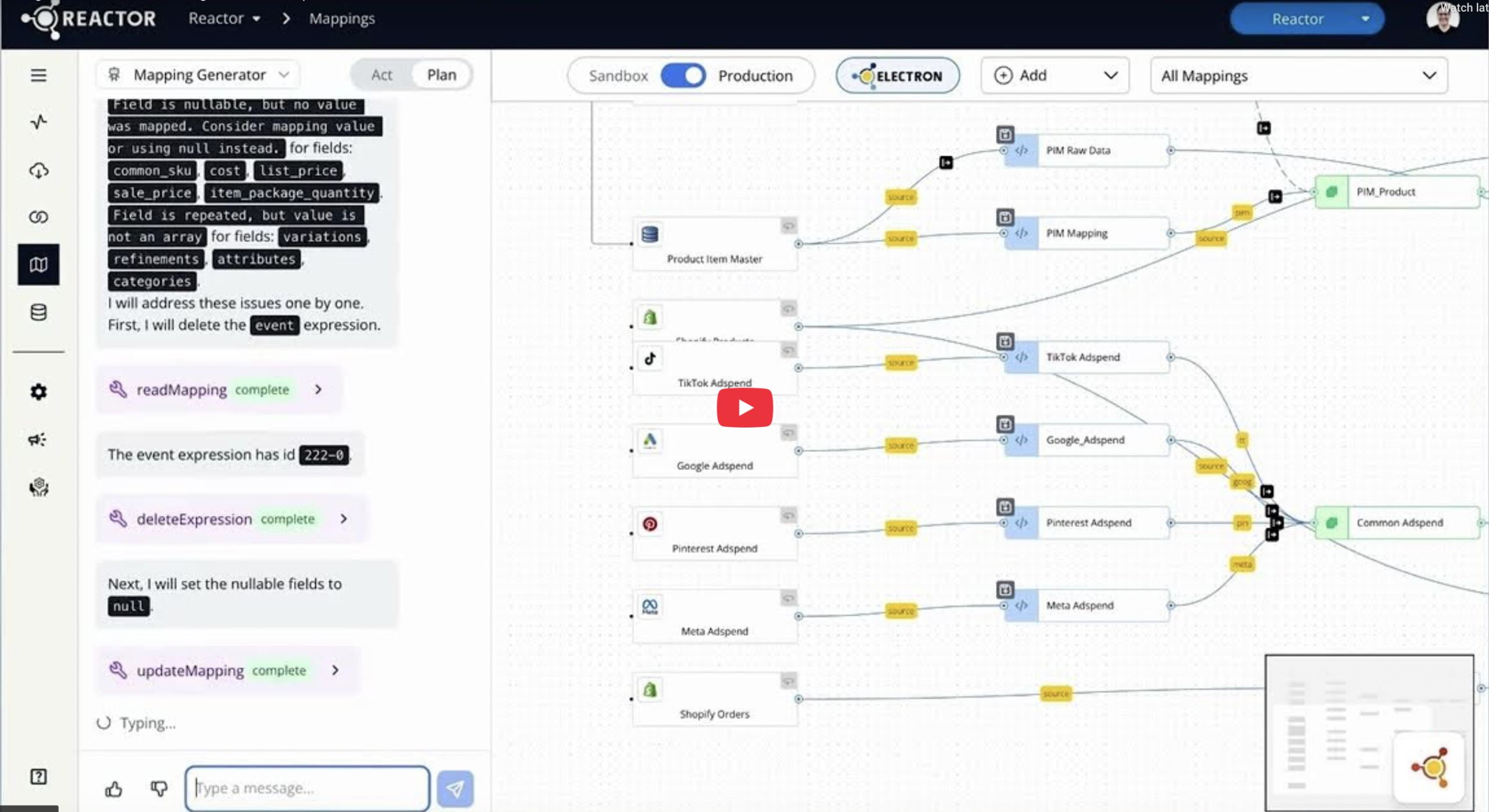
The real magic? Reactor’s Electron AI. It makes complex mapping nearly effortless.How It Works:
- Electron scans your source data
- Recognizes field names and structures
- Suggests mappings based on learned patterns
How It’s Reshaping Workflows:
Before Electron:- 2-3 engineers needed for mapping
- 2–3 weeks to months per new source
- 1 business analyst handles it
- New data sources mapped in hours
- 75% cost reduction
Your Next 5 Steps to Integration Freedom
- List your current data sources
- Identify the ones slowing you down the most
- See Electron AI work with your data in a demo
- Calculate the time and cost savings
- Start with one high-impact integration—then scale
The Integration Game Has Changed
The old way of doing integration is over. With 500+ connectors and AI-assisted mapping, Reactor is redefining what’s possible:- Set up in days, not months
- Consistent data everywhere
- Empowered teams, fewer delays